

Copyright 2022, Ray Bonneville
I worked as a bush pilot in the Canadian wilderness for two seasons in 1989 and 1990...
KILLING FOG
The heading indicator swings wild in the panel as I desperately try to fight my way through and around the blinding cloud cover that has suddenly dropped down from above as I climbed out of the shallow river basin. I know right off that I’ve made a deadly mistake. The back of my throat is suddenly filled with the acidic taste of fear, reminiscent of the incoming rocket and mortar fire I had lived through in Dong Ha, Vietnam in 1968.
The kid is looking around trying to get a read on me and the tense situation. I’m too busy keeping us in the air at a hundred plus miles an hour a few feet off the treetops to even look at him. I’m struggling to find my calm, to control the panic flooding my blood. At this point I’m just trying to stay airborne. We are going whichever way the limited visibility will allow, regardless of the heading I need to be on to get down to Clova. I am burning too much fuel trying to settle down and get oriented. Torn, disheveled rags of fog hang down into the pines in wispy shreds. If I fail to keep the ground in sight, the kid and I are dead.
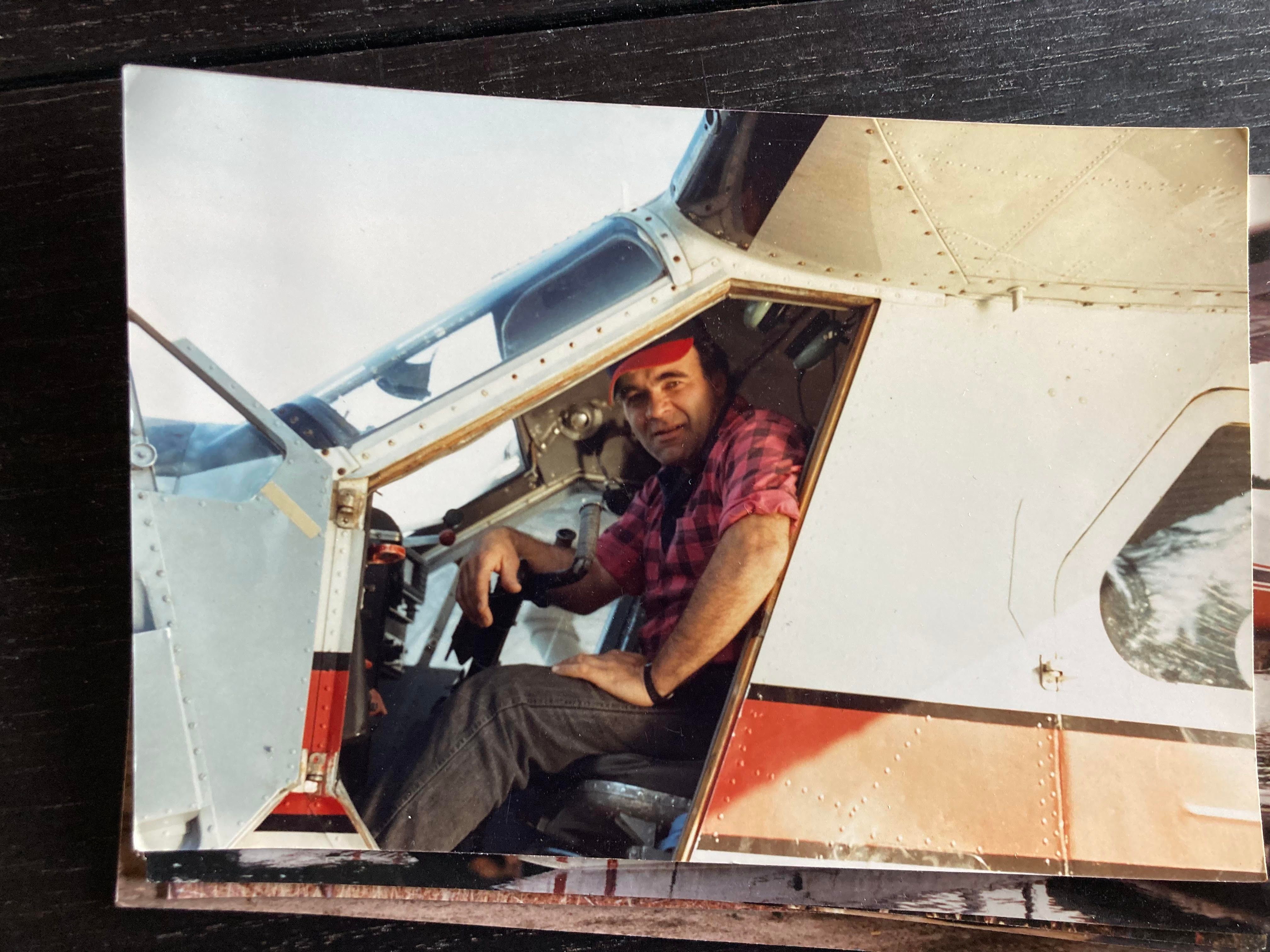
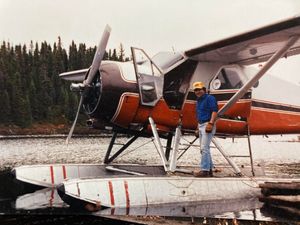
The day had started like a lot of days during the fall moose-hunting season in the Quebec bush. Under a low grey cloud ceiling, I followed the early morning ritual of pumping out the floats, fueling the plane, checking the oil level and cleaning the windshield. Evelyn was on the dock and pointed out my destination on the map. I pushed the plane away from the dock, worked the hand fuel primer and hit the starter switch until the nine-cylinder motor caught. I loved the uneven rumbling sound the four hundred fifty horsepower motor made, and the heady smell of motor oil in the cockpit.
The first mistake I made was allowing it to slip my mind that a week before I had dropped off two other hunters in the region I was heading into that day. They were now socked in at a higher elevation, higher than the cloud cover had been for the last few days, and they were surely running low on supplies. I usually relied on Evelyn to remind me of such things, but she hadn’t mentioned it.
I had enough fuel on board to get to my destination and back, plus roughly an extra hour’s worth. Had I remembered the stranded hunters, I likely would have thought more carefully about it. Fuel is heavy, and the decision about how much to have on board depends on the weight you’ll be carrying, which was as yet unknown to me.
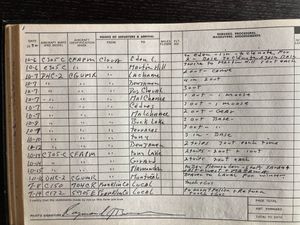
I taxied out onto the lake, jotting the date and time in my flight log. I did my run-up to check the mags and prop, then pumped down ten degrees of flaps. I pulled the water rudders up and poured on the power into the wind, holding the yoke all the way back into my chest to get the floats up and out of the water and gather enough speed to get airborne. They call it getting on “the step.”
Evelyn was running Air Tamarac by herself. A month earlier I’d flown her partner Jacques to get medical attention for his chest pains at the La Tuque hospital, and they’d kept him for open heart surgery. He would not be back this season. She usually stood on the dock watching the plane get smaller as it went. She’d listen for the drop in RPM that comes with every takeoff, and when she heard it, she would go back into the office, knowing I was up and on my way.
The air was smooth as a baby’s ass, like it often is under a low ceiling. A few seconds later I was headed northwest under a surly two-hundred-foot cloud cover. Scud-running under a low ceiling is the norm in bush flying. An hour earlier the cloud cover had been down to less than fifty feet, molesting the treetops. For the last four days it had been going up and down every few hours. It stayed up long enough to get a trip or two in before coming back down again to ground me. I thought myself familiar enough with its pattern to stay safe, but I was wrong.
After working my way around some higher terrain that disappeared up into the cloud cover, I located the hunting camp in a small clearing by the river’s edge. I landed on the dark, rust-colored water, cut the motor and glided to shore, allowing the tips of the floats to kiss the sandy bottom near the riverbank. I walked out onto the float and stepped through the shallow, weedy water in hip waders.
The kid I was there to pick up was nowhere to be seen, but his father walked up to say hello. We shook hands, eyeing one another. Slightly taller than me, he had a rugged face and a serious look about him. He wore heavy hunting clothes against the brisk fall air.
A huge, bloody, quartered bull moose lay on a tarp with its fur still on. Its massive, severed head had a large caliber bullet hole in its nose. My eyebrows must have gone up because the man said, “Yeah, I know. My son was excited when he took the shot; it was his first time, but I’m proud of him.”
“Right, so where is he?” I asked.
“He’ll be along soon. He went to get some gear we left down-river at the kill site. He shouldn’t be too long.”
It was then that the other two hunters stranded nearby came to mind. Without thinking, I said, “Okay then, I’ll be right back.”
I took off again and headed for the other camp, but soon had to turn back where the cloud cover met the rising terrain. I landed on the river again. It gave me an uneasy feeling to have used up that fuel.
The cloud cover soon slipped back down close to the trees again. That it changed so quickly should have told me something.
The kid was there now, his pile of gear by his kill. We shook hands and exchanged greetings. I made him out to be about eighteen years old, with a slight build and dark hair pushed back on his scalp. He had clear, intelligent eyes.
His father, who would be staying there longer, took me aside and said, “Listen, I really don’t like this weather. Why don’t you camp here with us tonight and make the trip in the morning? We have enough food and an extra sleeping bag. I also have a bottle of whiskey if that’ll sway you.”
His eyes were full of hope that I’d say yes. I looked up at the ceiling again as though considering his offer, but I was really thinking about sleeping in my own bed that night instead of on the cold, hard ground by that river.
“No, it‘ll be okay,” I said. “It’s been doing this for days, but it’s fairly predictable and I’m used to it, so no sweat. Let’s get the plane loaded and wait for it to lift again, which I know it will.”
He looked at me seriously for a few seconds, measuring my words against what he saw in my face. It was my decision to make, so he turned and busied himself around the campfire.
The fog was just off the treetops as we loaded the kid’s duffle bag, his rifle and some other gear into the back of the plane. Then I cross-spooned the heavy moose quarters in to save space. After that we each grabbed an end of the big antlers and worked the colossal head in, facing forward toward the cockpit. Its dead eyes stared dully from behind the gaping bullet hole in its nose, an image I knew would be with me longer than I cared to think about.
Once we had the plane loaded, the three of us sat around the fire drinking coffee, waiting to see what the fog would do. We didn’t say too much. The kid seemed happy about making his first kill. The father had a worried look on his face, having resigned himself to my decision to go.
It took a little over an hour for the ceiling to make its way back up to a few hundred feet. “Okay let’s go, there’s no time to waste,” I said. The father hugged his boy, then watched him climb in beside me. The boy kept looking at his father as we pulled out into the river flow. His father stared at the plane as we taxied away to lift off the river, into the killing fog.
*** To be continued ***
The cloud cover started pushing us back down into the treetops like some heavy god-like hand.
I knew I’d made a deadly mistake taking off when I did, as the visibility in the low fog not only denied me the option to turn back to the river, but also shut the door on making any kind of approach to land anywhere, period. I had no other choice but to try and claw my way toward Clova through the unforgiving bleakness.
I was bad-scared, and if the kid had any sense, he was too.
Due to my earlier unplanned sortie, I was lower on fuel than I needed to be, and that shook me.
In the back of my mind, I had a surreal vision of our twisted wreck hanging in the trees. In the nightmarish scene, the motor had pushed back into the cockpit, burning and crushing us, and the smell of leaking oil hissing against hot, misshapen metal hung in the air.
I managed to get us turned around enough to begin, if erratically, heading in the general direction for Clova, where I was at least familiar with the surroundings. Passing glimpses of useless water heartbreakingly continued to lose itself back into the fog. I was angry with myself for the deadly predicament I’d gotten us into.
Fool! You’re a damn fool for thinking you could beat something that has killed a whole slew of very good pilots over the years, pilots with a lot more experience than you.
We went on through the unrelenting fog for I don’t know how long, zigzagging as visibility allowed toward Clova, burning twenty gallons of fuel an hour. The pounding of the motor hammered through my headset. I was using every bit of experience, every bit of learned-from error, to keep us airborne and alive.
Suddenly, an out-of-place shape grabbed my attention. I turned my head to see the monster just off my left wingtip. Rows and rows of large grey rivets dotted the huge high-voltage tower I’d somehow just barely missed crashing into. There were two Hydro Quebec power lines running through that area. Incredibly, in my state, they had somehow slipped my mind.
Looming in the split windshield, long, thick, black high-tension wires drooped obliquely in and out of the fog — now visible, now gone. I flew along, doing my best to keep the fire-carrying lines to my left, while looking for a place to get over them, realizing there was no safe place to do so.
For an insane moment, I considered going under the wires — that’s how low I was flying. But I pulled back on the yoke instead. I desperately pointed the nose up into the soup for an eternity that only lasted a few seconds, then pushed it blindly back down. I could see the ground again! I was astonished to still be flying. I couldn’t understand how my floats hadn’t snagged on the wires, and that we weren’t hanging upside down, caught like a struggling insect in a spider web, and burning.
The fuel needle was now closing in on the red line.
I was pretty sure I was somewhere northwest of Clova, but I didn’t know my exact position. The low, disorganized fog was relentless. Flashes of useless bodies of water continued to slip in and out of sight. Every second was poisoned with fear as I started to entertain the possibility of a crash landing. If there was no kind of water or clearing dead ahead when the motor quit, I’d aim the nose between two trees, allowing the wings to rip off on our way to the ground, to try to keep the cabin as intact as possible. With no more fuel on board, there’d be no fire. It would be our only chance.
More tense, harrowing minutes went by.
I will never know what made me turn my head to the left when I did. Just then, I caught sight of two dull-grey silver lines below. Unbelievably, the railway track that cuts east to west across Quebec, between La Tuque and Val D’or, had shown itself to me. I knew I was either east or west of Clova. West made the most sense.
I banked hard left and set up to fly not much higher than twenty or thirty feet over the tracks, through the torn, dripping fog. I kept them in sight, desperately hoping Clova was up ahead, as it would be if I was to the west, and not behind me if I was to the east. The fuel needle was now kissing the red line, and engine failure could only be a few minutes away, if that.
What seemed like an eternity later, a white glow of reflected light in the cloud showed itself up ahead. A few straggling freight cars on side tracks confirmed to me that I was indeed almost upon Clova. I knew from experience that I needed to keep left of a tall radio tower and its many support wires, then get over a forested rise. If I could do those two things at the right time, Tamarac Lake would be under my floats a few moments later.
Instinctively, I banked left. To my right through the foggy haze, I barely discerned the blurred red glow of flashing radio tower lights, fading in and out of the bleakness as I flew by. Without thinking, I eased back on the yoke while hand-pumping down the flaps to set up a powered, nose-up flare. I waited to feel the water beneath my floats, fully expecting the motor to cough and quit at any second.
Then, incredibly, I could see and feel the water. I was on the lake and pulling back on the throttle. The floats settled in as their drag bled off the remaining speed.
I struggled to contain the deep shaking inside my body. The relief was indescribable. I couldn’t think of anything to say to the kid. I’d hardly been aware of him, but now I could really feel him beside me. He had to have been frightened beyond belief.
I taxied up to the dock and secured the airplane to it. As I began to unload the kid’s gear and kill, Evelyn opened the office door to survey the scene. She looked at me, then at the low ceiling practically touching the water and shook her head slightly before going back inside. I knew what she was thinking and was sure I’d hear about it later.
As I hosed down the deck inside the plane, the kid looked at me as his father had done earlier, his eyes searching for the truth behind my eyes.
“Were those red numbers displaying the fuel level?” he asked.
“No, that was the Loran-C, showing miles to destination in tenths,” I replied.
“That was no routine flight, was it?” he asked.
“No, it was not,” I replied, but said nothing further.
I wondered what he would have to say to his father. I shook his hand, and walked away, leaving him standing there with his stuff all around him.
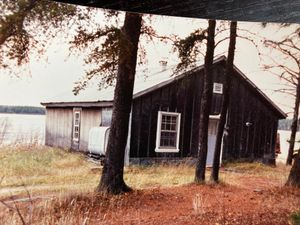
I walked up the dirt road, past my cabin and up the rise to the little local bar. The place was not much more than an L-shaped room with a few tables and chairs, a jukebox against the wall, a counter with a few stools and a single row of bottles behind a counter. A nook with a hotplate served as a makeshift kitchen area. The bar was attached to living quarters where the owner/barmaid Francine lived. She usually wore a short skirt and tight top, inviting a man’s eyes her way. On any other day I’d be looking at her, tempted to flirt, but today I just collapsed in a chair.
“Double whiskey, please.”
She obliged me. I ordered two more in short succession. I sat there in a daze, trying unsuccessfully to get drunk, giddy to be alive and still very shaken inside. A French song was playing on the juke — Allons danser Colinda, pendant que ta mere nous voit pas.
I’ll be damned! I’m still alive, I didn't crash the plane and that kid’s dad will see his son again.
I closed my eyes. I admitted to myself that I’d allowed overconfidence to become my mortal enemy.
I’m going to kill myself or worse if I keep doing this up here, and maybe take somebody else with me.
As I made my way back to my cabin, I could feel something changing inside me, but I couldn’t put my finger on what it was exactly. Once inside, I picked up my old Gibson guitar. With the whiskey still coursing through my veins, it took a while before I could play steady. I hit an E chord over and over, like I used to do when I’d first gotten a guitar from my mother as a teenager. I poured myself another whiskey and kept playing that same chord, again and again.
I would carefully finish out the season, then think only about writing my own songs. I was 41 years old.